


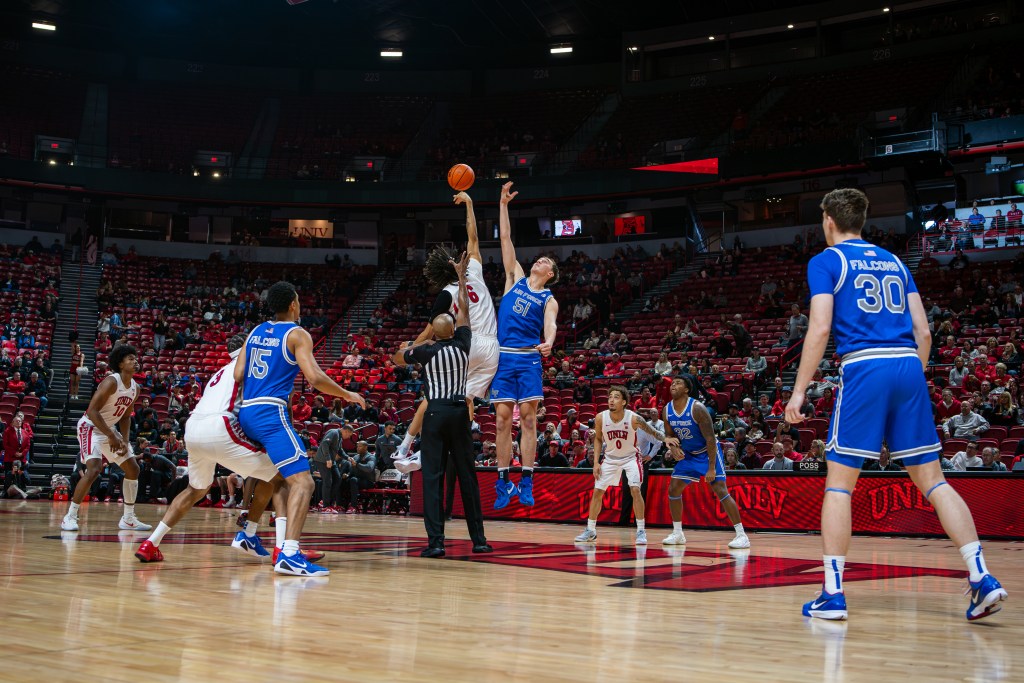
There isn’t much mystery left in UNLV’s season, only a shrinking margin for error.
With the Rebels sitting in the crowded middle of the Mountain West standings, the math has simplified. The at-large path never truly materialized. The double-bye push now requires near-perfect execution. What remains is seeding, momentum, and avoiding the kind of Mountain West tournament path that forces four games in four days.
That’s why Saturday’s trip to Colorado Springs matters more than the records suggest.
Air Force is 3-23 overall and winless in league play. UNLV already handled the Falcons 67-39 in Las Vegas, controlling nearly the entire night and pushing the lead to 29. On paper, this should be routine.
But UNLV doesn’t get to live on paper anymore.
Because the last time the Rebels were on the floor, they were reminded of the only thing that can consistently beat them: their own defensive discipline and their own focus.
“You score 86, you gotta win the game,” head coach Josh Pastner said after Wednesday’s loss. “Just, unfortunately, we just have not been a good defensive team this year.” He didn’t hide from it. “I haven’t done a good enough job… defensively… with our group.”
That is not a throwaway quote. That is the warning label going into Air Force.
The Stakes
UNLV enters at 13-13 overall, still trying to shape its Mountain West tournament path. Every remaining game now carries bracket weight. The top tier has created separation. The middle is crowded. The difference between starting Wednesday and earning a cleaner draw later in the week often comes down to one road loss you were “supposed” to avoid.
The efficiency gap between these teams is real. UNLV has been productive enough offensively to handle games like this. Air Force has not. The Falcons are scoring just over 61 points per game while giving up nearly 80.
That doesn’t guarantee anything in Colorado Springs.
But it does mean UNLV should manage this matchup if the Rebels take care of the possession math and stop giving teams life early.
And that last part is not theoretical. Pastner has been blunt about it.
“Our starts have not been good,” he said. “Our start allows them to give them life and the confidence… and we fight back every darn game pretty much… but we dig ourselves a hole and it just bites you… eventually.”
Air Force is not the kind of team that should punish UNLV for a slow start.
But UNLV is not in any position to test that theory.
The Tempo Question
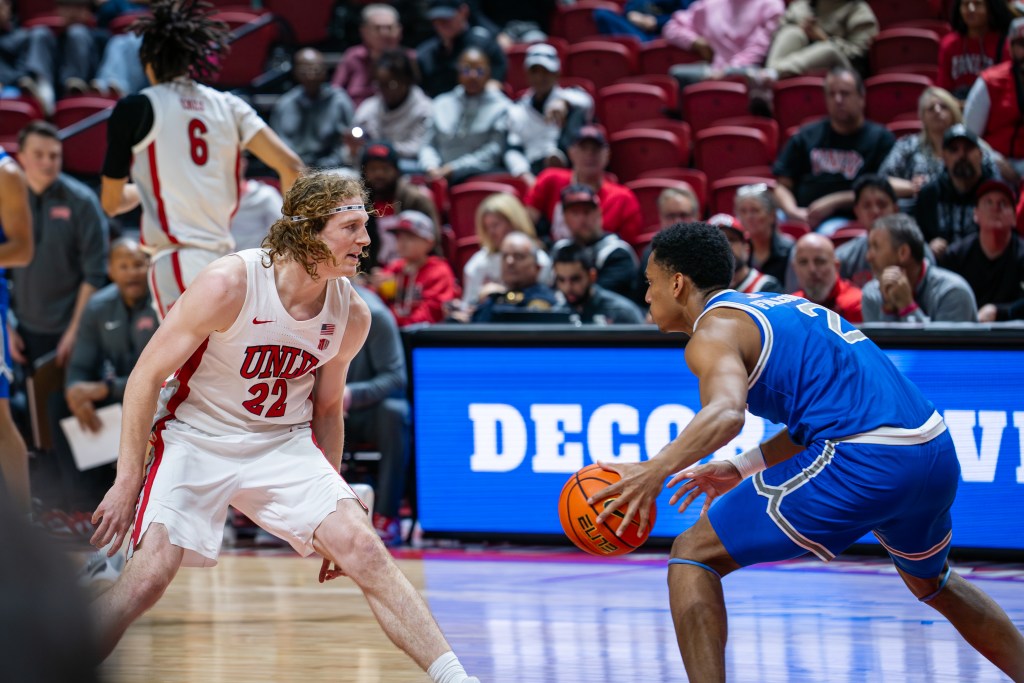
Air Force’s identity is built around compression. The Falcons want to shorten the game, extend possessions, and turn every trip into a half-court rep. They are not trying to out-athlete you. They are trying to make you impatient.
That’s why Colorado Springs can feel weird even when it shouldn’t.
UNLV does not have to run to win Saturday.
But the Rebels cannot afford empty possessions in a slower environment. When the possession count drops, turnovers and defensive lapses carry more leverage. The game tightens faster. The margins shrink.
Pastner framed it in the language that matters most for this matchup: discipline, vision, and cutting defense.
“You can’t ball watch against this team,” he said in reference to Colorado State’s backdoor action. “You gotta see ball and man… and we started ball watching, and they just got us on multiple back doors.”
That’s not just a Colorado State problem. That’s a universal problem…especially against an Air Force offense that relies on movement, cutting, and forcing you to guard for the full clock.
What the First Meeting Told Us
The December meeting in Las Vegas provided a clear blueprint for how UNLV should approach this game.
The Rebels never trailed and controlled the entire night. The separation came from physical control and clean possessions, not hot shooting.
UNLV dominated the interior:
- Points in the paint: UNLV 40, Air Force 22
- Rebounds: UNLV 49, Air Force 32
- Second-chance points: UNLV 16, Air Force 8
Air Force shot 27.8 percent from the field and never found any type of rhythm. UNLV’s length disrupted passing lanes and cut off clean looks.
Just as important, the Rebels did it without needing a hero performance. That matters because the most dangerous version of UNLV is the one that tries to rescue games late rather than control them early.
The Matchup Edges
UNLV’s Physical Advantage Still Exists
The most repeatable edge in this matchup is inside.
Air Force has struggled on the glass all season. UNLV’s frontcourt showed in the first meeting that the Rebels can create extra possessions and steady offense through rebounding and paint touches. If UNLV wins the boards again, the tempo trap loses its bite.
Extra possessions are the cleanest way to break open a slow game.
The Three-Point Variable Is Still the Only Lane
If Air Force is going to hang around, it usually starts at the three-point line.
Lucas Hobin leads the Falcons at 11.8 points per game and remains their most active perimeter weapon. Kam Sanders adds 11.6 points and serves as the primary creator, leading the team in assists.
Outside of that, Air Force lacks consistent scoring depth. UNLV’s job is simple: don’t give their main threats clean air.
One of the reasons Wednesday’s loss stung is that UNLV did the hard part first, only to lose focus.
“We wanted to take the 3 out,” Pastner said. “We did take the 3 out… and then we started ball watching.”
That’s the fear. Not talent. Focus.
Turnovers Can Manufacture Life
In a compressed game, live-ball turnovers are fuel for underdogs. Air Force does not score easily. But if UNLV gifts possessions, it can keep the building engaged and keep the game within reach longer than it should be.
This is where UNLV has to be professional: value the ball, get a shot, and force Air Force to execute offense repeatedly.
Players to Watch

Dra Gibbs-Lawhorn remains UNLV’s late-clock stabilizer, but Saturday is not a “late-clock hero” game. It’s a “right-play” game. Pastner even acknowledged that in the Colorado State loss, noting moments where Gibbs-Lawhorn tried to do too much.
“I thought a couple times… he tried to play hero ball,” Pastner said. “You gotta let it come to you. The ball will find you back.”
Gibbs-Lawhorn put it even more plainly when asked what’s missing in these slow starts and midgame lapses.
“Focus,” he said. “Fifteen people on the roster, playing or not playing, focused. Not goofing around before the game. Not goofing around in practice. Focused.”
That quote is the entire pregame. It’s the season.
If UNLV is focused, this matchup should be controlled. If UNLV drifts, it becomes the kind of road game that tightens for no good reason.
Bottom Line
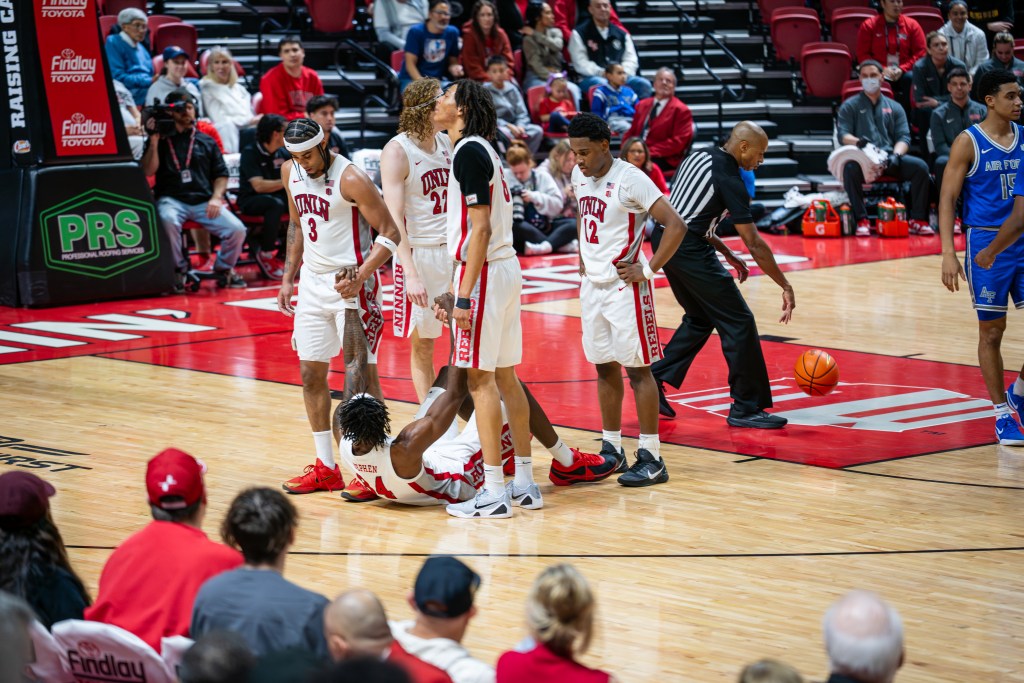
The math says UNLV should win.
The matchup says UNLV has the physical edge.
The setting says discipline still matters.
This isn’t a trap because Air Force is dangerous.
It’s a trap because UNLV has shown it can give teams life early, then spend the rest of the night chasing its own mistakes.
Pastner said it best: “We can beat anybody… but because of our lapses defensively, we can lose to anybody.”
Saturday is where that statement either becomes a lesson or a problem.
Leave a Reply