


The Mountain West usually tells you who its Player of the Year is before March shows up. You can feel it. The league settles on a name. The numbers line up. The team wins enough. The weekly awards reinforce it. By late February, the debate fades and turns into confirmation. That has not happened this year. This year feels different because every argument has a hole in it. Every candidate has something real, but nobody checks every box. That is what makes this race honest. It is not about finding a perfect résumé. It is about deciding what matters most.
Is it scoring?
Is it efficiency?
Is it winning?
Is it control?
Depending on how you answer that, you end up with a different Player of the Year. And that is the tension at the center of this race. Because the award says Player of the Year. But it is almost always decided like Most Valuable Player on a team that won enough to matter.
Standings Context
San Diego State and Utah State sit tied at the top at 13-4. New Mexico is right behind at 12-5. UNR and Grand Canyon are within striking distance at 11-6. Then there is the middle, where Colorado State, UNLV, and Boise State are all sitting at 9-8, close enough to matter but not clean enough to define the race. The standings are tight, and that is part of the problem. There is no obvious anchor. Even the weekly award trail has not narrowed it. It has pointed in different directions, which is usually a sign that the league sees the same thing we do. A bunch of valid cases with no one resume separating clean.
Dra Gibbs-Lawhorn (UNLV)
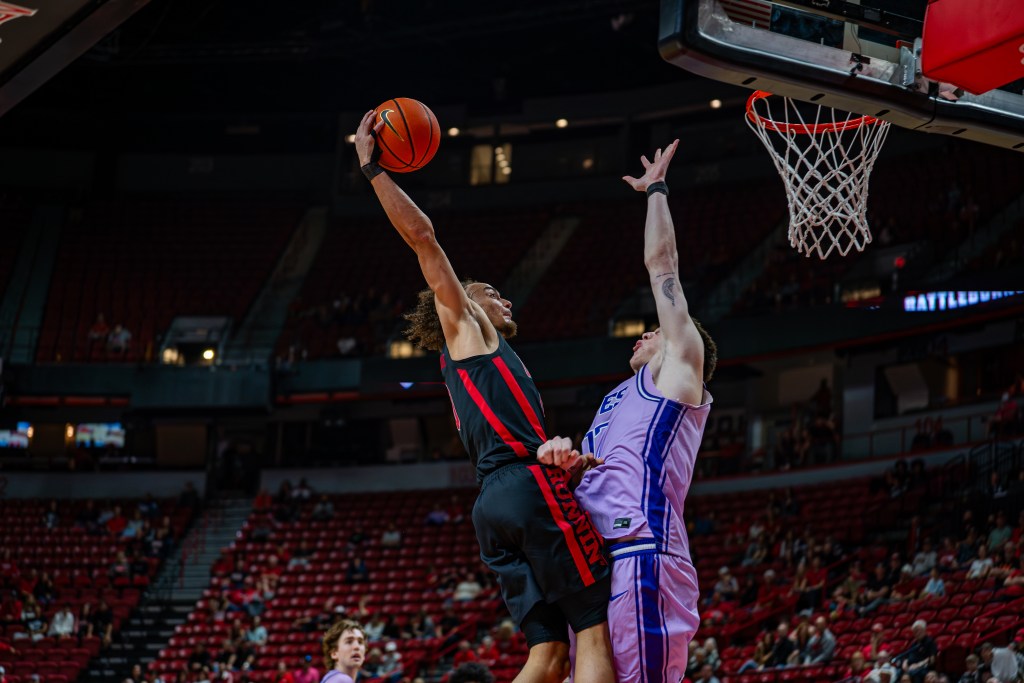
If this award were strictly for the hardest cover and most valuable to their team, Dra Gibbs-Lawhorn has the cleanest argument. He is producing at the highest-scoring level in this group without sacrificing efficiency, and his shot profile explains why it scales. He is efficient at the rim, strong in the paint, and lethal above the break. UNLV’s team position is the only traditional knock, because the individual résumé is exactly what voters usually reward when they are willing to separate player from standings. He is averaging 22.8 points per game (25.6 per 40) with a 64.4 eFG%, a 27.7 usage rate, and just a 10.8 turnover rate, and he is doing it on 53.5 percent shooting from the field and 47.5 percent from three. The shot profile is what makes it feel unfair. He is finishing 69.4 percent at the rim and hitting 49.5 percent of his above-the-break threes, with very little wasted space in where his attempts come from. The league has backed it with Player of the Week recognition, which matters because those awards are usually the first breadcrumbs voters follow. If UNLV finishes in the pack, that is the pushback. If voters separate the player from the standings, that is the path.
Corey Camper Jr. (UNR)
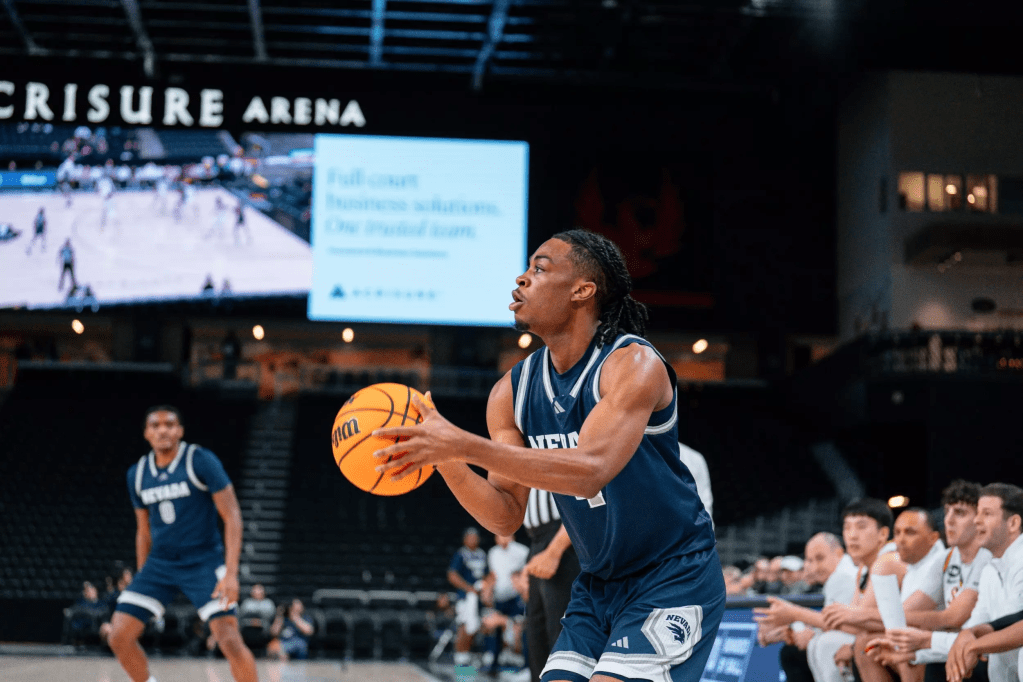
Corey Camper Jr.’s case is clean because it stacks the three things voters trust: scoring, efficiency, and possession security, and it lives on a shot diet that does not waste touches. He hits threes at an elite rate, finishes at the rim, and avoids the dead zones that inflate attempts without improving outcomes. UNR’s record puts him in striking distance of the league’s top tier, and his turnover profile gives him the steady-hand narrative that fits the award. He is averaging 19.0 points per game (22.7 per 40) with a 60.7 eFG% on 50.2 percent shooting from the field and 46.7 percent from three, paired with a 25.8 usage rate and an 8.5 turnover rate. That is the “I am your primary guard and I am not giving possessions away” profile that tends to age well in March voting. The weekly award layer matters here too, because it reinforces that his best stretches have been visible enough to get the league’s stamp in real time, not just in the spreadsheet after the fact. If voters lean toward efficiency tied to winning context, this is one of the cleanest cases on the board.
MJ Collins (Utah State)
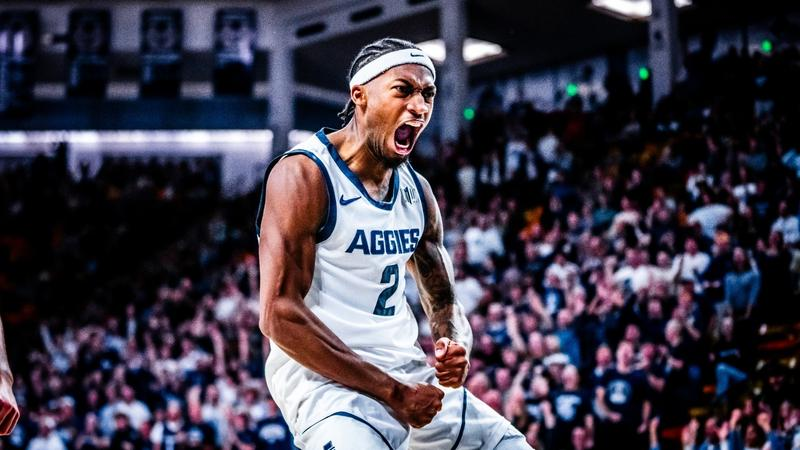
MJ Collins has the simplest argument voters have used for years: low mistakes, first place, steady production. Collins does not turn the ball over. He gets to the line at a solid rate. He finishes inside. There is very little waste. He is averaging 16.0 points per game (21.5 per 40) with a 54.8 eFG%, a 25.1 usage rate, and a 6.5 turnover rate, plus a 34.5 free throw attempt rate and 60.7 percent finishing on twos. That is rare control at that level of involvement, and the fact that he has a Player of the Week on the résumé gives the case a real foothold if Utah State ends up with a trophy. The question is separation. The three-point production is ordinary, and the defensive event creation is quiet, but if the vote becomes “best guard on the best team who doesn’t make mistakes,” Collins is in the room.
Tomislav Buljan (New Mexico)
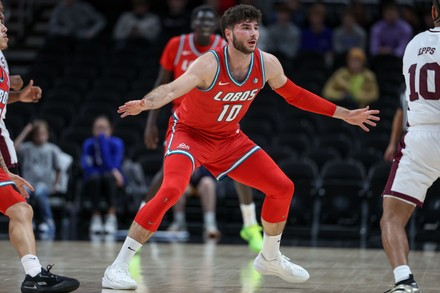
Tomislav Buljan is the outlier in style, which is exactly why his case is interesting. His value is not perimeter shot-making. It is rim pressure through physicality, offensive rebounding dominance, and drawing fouls at a massive rate. He creates extra possessions, which is its own form of offense. He is averaging 12.2 points per game (18.9 per 40) and 10.3 rebounds per game, including 4.3 offensive rebounds, while posting a 54.5 free throw attempt rate. That is pressure on every possession. If the award shifts toward impact instead of scoring totals, his case carries real weight, because he is changing the math of the game in a way box-score scoring does not always capture.
Mason Falslev (Utah State)
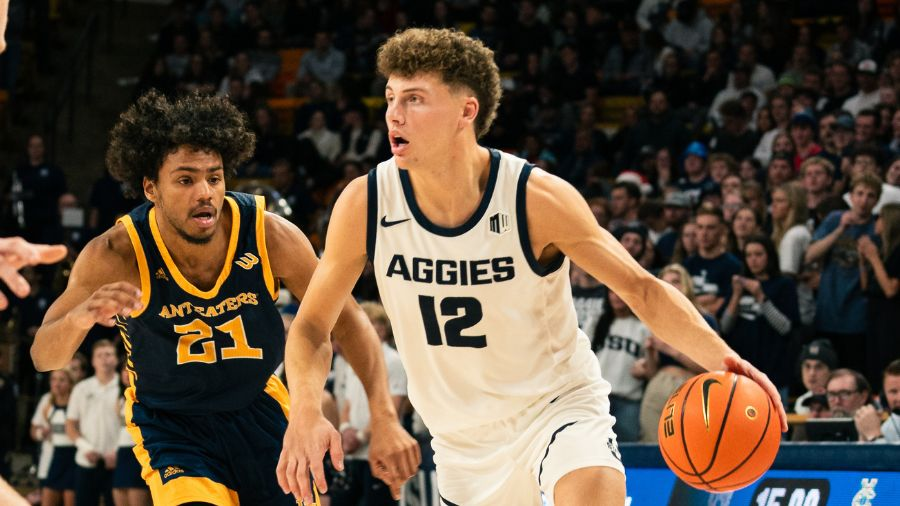
Mason Falslev is the version voters have rewarded before, especially when the standings matter most. Efficient scoring. Strong shooting. Rebounding. Playmaking. Winning. It all connects. He is averaging 16.2 points per game (20.1 per 40) while shooting 52.2 percent from the field and 43.9 percent from three, along with 5.4 rebounds and 3.0 assists per game, and his assist-to-turnover ratio sits at 2.13. There is no obvious hole in the profile. The only missing piece is the weekly award signal, which is not everything, but it often hints at who is driving the conversation week to week. If Utah State finishes first, that may not matter. First place has a way of smoothing over what is missing.
Jake Hall (New Mexico)

Jake Hall’s case is the cleanest efficiency profile in the field, and it is hard to ignore if you care about possession value. He combines strong scoring with elite effective field goal percentage, high-volume threes at an absurd make rate, and a turnover profile that keeps possessions intact. He is averaging 17.1 points per game (21.7 per 40) with a 63.7 eFG% and a 6.8 turnover rate, shooting 50.3 percent from the field and 47.7 percent from three. That is elite shot-making with almost no possession cost. He has been recognized at the freshman level, but not in the main Player of the Week cycle, which is more about narrative visibility than player quality. If the vote leans toward efficiency and shot quality, this is one of the strongest arguments in the league.
Jaden Henley (Grand Canyon)
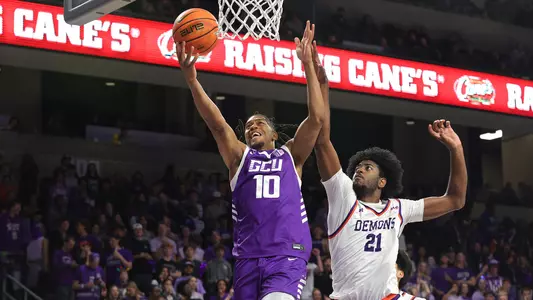
Jaden Henley’s case is force. Everything runs through him. He attacks the rim, gets to the line, rebounds like a forward, and creates offense for others while carrying a massive workload. He is averaging 17.8 points (21.6 per 40), 6.4 rebounds and 3.3 assists per game, with a 28.9% usage rate and a 48.2% free throw attempt rate. The efficiency is not perfect, and that is the trade. But the responsibility is massive, and the league has backed it with multiple Player of the Week honors, which matters because it shows his best stretches have been loud enough to register beyond the box score. If voters value workload and pressure over clean shooting splits, Henley has the profile.
Reese Dixon-Waters (San Diego State)
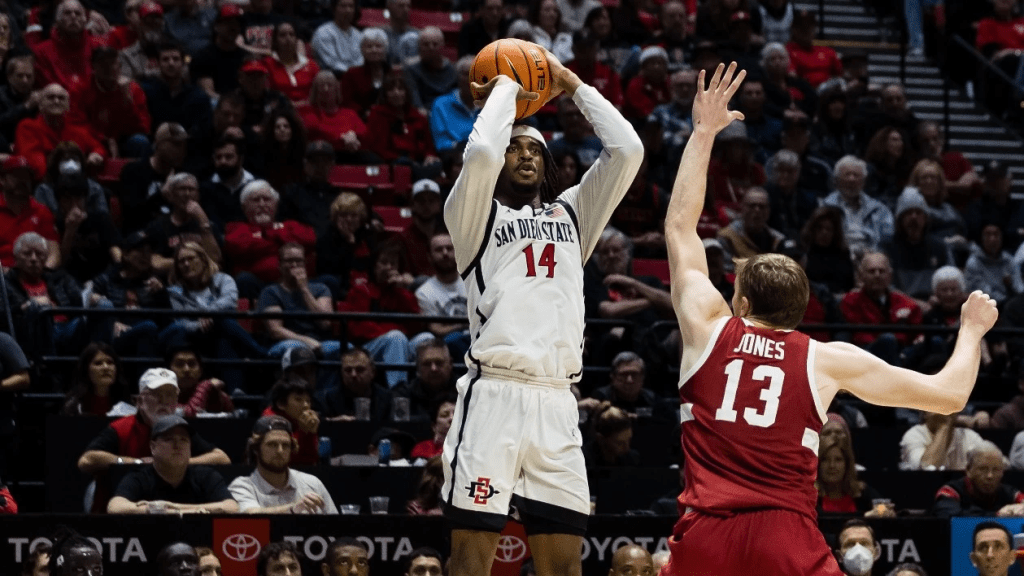
Reese Dixon-Waters is the winning and trust case. Not built on volume. Built on reliability and possession endings. He closes games. He gets to the line. He converts. He is averaging 13.6 points per game (17.9 per 40) with a 34.9% free-throw attempt rate and 90.0 percent at the line, for a team tied at the top. There are no weekly awards here, which fits the shape of his value. He is not always the biggest spike week to week. He is the “you know what you are getting in a tight game” player. If San Diego State wins the league outright, that context could matter more than any single stat category.
What The Vote Is Really About
This is what the vote is really about. The standings are tight and the candidates do not match clean archetypes, so the final weeks are not going to simplify this in the usual way. This race is not going to be decided by stats alone. It is going to be decided by what voters believe the award represents, and even the Player of the Week trail has only reinforced the split. If it is dominance and shot-making at scale, Gibbs-Lawhorn has the loudest case. If it is control, efficiency, and winning alignment, Camper is the cleanest blend. If it is first place plus balanced contribution, Falslev becomes the traditional answer. If it is possession efficiency and shot diet, Hall has the sharpest profile. If it is low-mistake scoring on the best team, Collins has a classic pathway. If it is possession math through rebounding and foul pressure, Buljan is the outlier with real value weight. If it is workload and pressure, Henley has the force case. If it is winning within structure, Dixon-Waters gets the closer narrative.
There is no clean answer. And that is what makes this real. Because this year, the Mountain West is not telling you who the best player is. It is forcing you to decide what best actually means.
Leave a Reply