
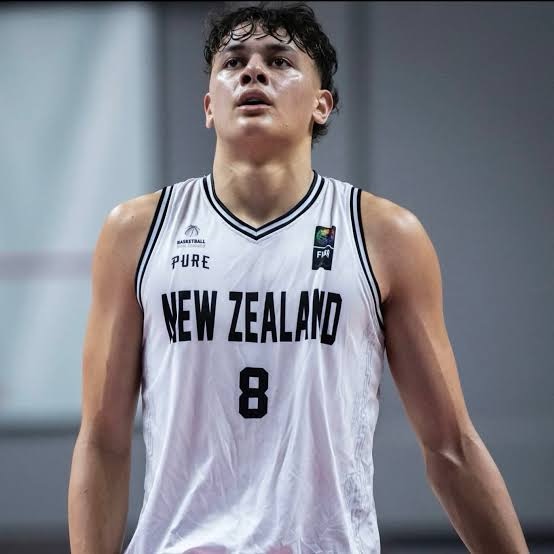
LAS VEGAS — UNLV did not just add another player Tuesday.
The Rebels added one of the more interesting pieces of Josh Pastner’s second full roster build, landing four-star forward Jackson Kiss after he flipped from Iowa State.
Kiss announced the move on Instagram after previously signing with the Cyclones as part of their 2026 recruiting class. The 6-foot-8, 230-pound forward from New Zealand was one of four incoming freshmen in Iowa State’s class and is rated as the No. 127 player nationally in the 247Sports Composite.
UNLV has spent most of this offseason working through the transfer portal, trying to add older players who can help stabilize the roster quickly. Kiss gives the Rebels something different: a real high school frontcourt prospect with size, physicality and enough skill to be more than a late roster filler.
The frame stands out first. At 6-foot-8 and 230 pounds, Kiss already has the body to eventually handle physical frontcourt minutes. He is not some thin project who needs two years before contact becomes realistic. He has enough size to compete, and that matters in a Mountain West that can punish teams without playable frontcourt depth.
The more interesting part is what comes with that size. Kiss has been viewed as one of the better playmaking frontcourt prospects in the 2026 class, and that is where the fit becomes more intriguing for UNLV. He is comfortable with the ball in his hands, can attack mismatches, make reads for teammates and play through contact around the rim.
Kiss’ game is built around feel, physicality and versatility. He has good hands, soft touch near the basket and enough passing ability to function as more than a traditional frontcourt body. He is not a finished offensive player, but for a freshman his size, the combination of strength and instincts gives UNLV something to develop.
His production backs that up. At the Nike EYBL Peach Jam, Kiss averaged 14.6 points, 6.6 rebounds, 2.0 assists, 1.0 steals and 1.4 blocks per game while shooting 65.3 percent from the field for Vegas Elite. He also had a 27-point, six-rebound, three-block game against Team Melo, one of his better performances of the summer.
The efficiency is the first thing that jumps out, but the rest of the stat line may matter more for UNLV. Kiss rebounded, passed, protected the rim and created defensive events. That is the profile of a forward who does not need touches called for him to stay involved.
There is also international experience here. Kiss played for New Zealand at the FIBA U17 World Cup, helping his team finish fourth. He averaged 7.9 points, 6.6 rebounds and 1.9 assists in the event, and scored 17 points in New Zealand’s quarterfinal win over Lithuania. It adds to the picture of a player who has already played in meaningful settings.
The Utah Prep connection is worth noting, too. Kiss played his final prep season under former UNLV guard Mark Dickel, one of the best passers and point guards in Rebel history. That is more than a local tie. So much of Kiss’ appeal is tied to feel, reads and decision-making, and being coached by a former high-level point guard gives that part of his development more context.
Offensively, Kiss gives UNLV a forward who can do more than finish plays around the basket. He has the strength to play through contact, but his game is not limited to the paint. If the shooting continues to develop, he can become someone who helps spacing, attacks mismatches and keeps the ball moving instead of stopping the offense.
Defensively, his value will depend on how many matchups he can eventually handle. Kiss has enough size to guard frontcourt players, but his upside grows if he can move well enough to switch and defend in space. The best version of him is not just a lane-bound big. It is a forward who can rebound through traffic, hold up physically and survive when pulled away from the rim.
That does not mean he should be treated like an instant answer. Kiss is still an incoming freshman, and the jump to college basketball is real. UNLV should not need him to be one of its primary players right away. The older players on the roster still have to carry most of the immediate production.
The more realistic path is for Kiss to compete for minutes in non-conference play, adjust to the speed of the college game and earn a larger role if he handles those opportunities well. There is a version where he plays early because the frame and feel translate. There is also a version where he needs time. That is normal for a freshman forward.
There is a recruiting win baked into this, too. Iowa State is not some throwaway flip. T.J. Otzelberger has built a consistent Big 12 winner, and the Cyclones had a strong class before Kiss changed course. Pulling a signed four-star prospect from that situation is a legitimate win for UNLV.
It does not answer every question for the Rebels. It does not suddenly make the roster complete. UNLV still needs the rest of the group to settle, and the portal additions still have to translate.
But Kiss does change the feel of the class a little bit.
Much of UNLV’s roster build has been about projection through older players. Can Tyler Harris get closer to his Washington or Portland version? Can Dontrez Williams become more efficient in a smaller role? Can Jeremy Foumena give the Rebels playable size? Those are useful questions, but they are short-term bets.
Kiss is more of a long-term swing, and that is part of the appeal.
He gives UNLV a freshman forward with size, international experience, playmaking feel and a development path worth taking seriously. Maybe that does not show up fully in November. Maybe it takes time. But for a program trying to build more than a one-year roster, that kind of addition matters.
For UNLV, the value is not just what Kiss can give the Rebels right away. It is what he could become if the shooting, feel and defensive versatility carry over.