
UNLV received the kind of preseason recognition this week that would have felt unusual around the program not long ago, but the value of the news is not in treating it like a prediction. It is in understanding what it says about where the roster is, how the program is being viewed and what still has to be proven.
The Rebels placed 15 players on Phil Steele’s 2026 Preseason All-Mountain West teams, the program announced, adding another marker to an offseason already shaped by expectation. The number is significant, and so is the timing. UNLV is coming off three consecutive bowl appearances and three straight trips to the conference championship game, and it now enters Dan Mullen’s second season with enough roster recognition to be discussed differently.
The important part is not simply that a preseason magazine likes UNLV. The important part is what the list actually says, and what it does not say. It says the Rebels have recognizable players across the roster. It says the program is not being viewed through one star, one transfer or one position group. It says UNLV has enough returning production and incoming experience to be taken seriously in a Mountain West that no longer has the same established order.
It does not say the Rebels have solved their quarterback transition. It does not say the offensive line will immediately settle. It does not say the defense will be consistent enough over 12 games. It does not say UNLV is the favorite by default. That is the difference between a useful news item and a hype piece.
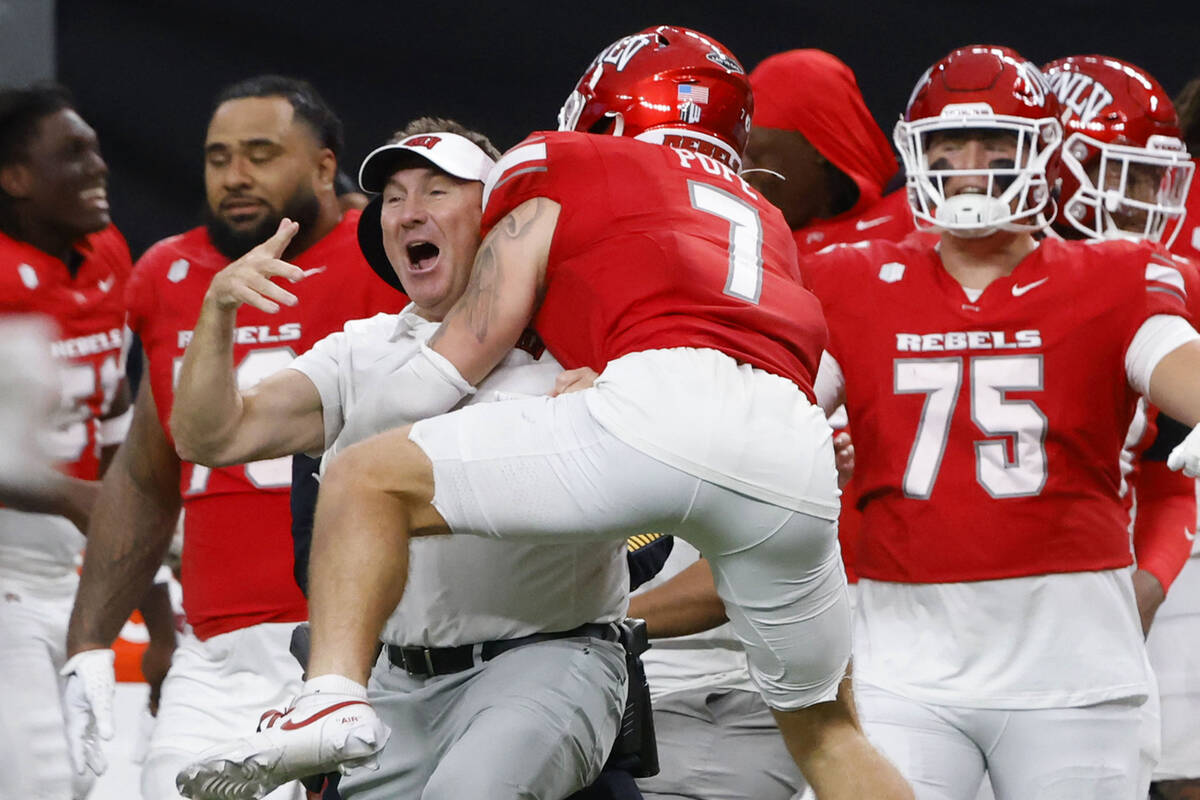
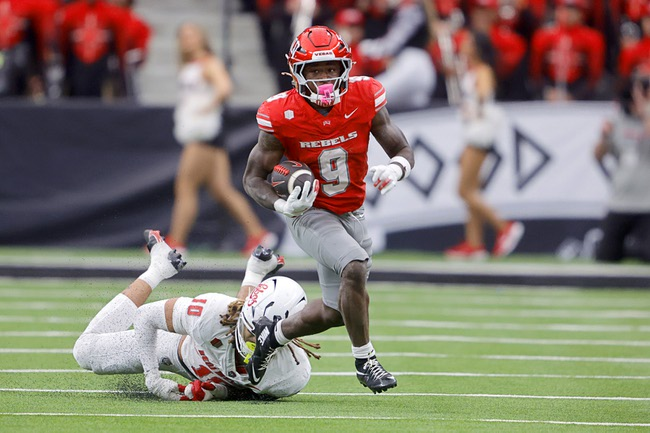
Phil Steele named running back Jai’Den “Jet” Thomas, center Austin Boyd, cornerback Avery Helm and safety Jake Pope to the first team. Quarterback Jackson Arnold, wide receiver Taeshaun Lyons, offensive tackle Jackson Brown and defensive lineman Lucas Conti were named to the second team. Tight end Keyan Burnett, defensive end Landen Thomas, linebacker Blesyng Alualu-Tuiolemotu and kicker Ramon Villela made the third team. Wide receiver Kayden “Big Play” McGee, defensive tackle Cohen Fuller and linebacker Cam Santee were named to the fourth team.
The list is broad, and that is the point. UNLV placed seven offensive players, seven defensive players and one specialist on the teams. The Rebels had selections at quarterback, running back, wide receiver, tight end, center, offensive tackle, defensive line, defensive end, linebacker, cornerback, safety and kicker. That does not prove the roster is complete, but it does show the roster is being evaluated as more than a collection of a few obvious names.
That matters because the Mountain West is changing around them. Boise State, Fresno State, San Diego State, Utah State and Colorado State have moved to the rebuilt Pac-12. The league no longer has the same automatic starting point for its football conversation. New Mexico, UNLV, Air Force, Hawaii and North Dakota State all enter 2026 with different arguments for why they can matter. In that environment, the question is not only who has the best player. The question is who has enough pieces to survive the season.
UNLV’s preseason list is evidence that the Rebels have pieces. Thomas is the easiest place to start because his case is not built on projection. He enters his senior season ranked eighth in school history with 2,457 career rushing yards and fifth with 31 rushing touchdowns. Last season, he ran for 1,036 yards and 12 touchdowns on 148 carries, averaged 7.0 yards per carry and added 39 receptions for 237 yards and another touchdown.
That gives UNLV something steady while the rest of the offense changes. Arnold’s second-team selection will draw the larger national reaction because of his path. He arrives after stops at Oklahoma and Auburn, and his 2025 Auburn season included 1,309 passing yards, six passing touchdowns, 311 rushing yards and eight rushing touchdowns. The talent is obvious, and the résumé is unusual for a Mountain West quarterback. The question is whether it translates quickly inside a new offense.
That is where Boyd and Brown become more than supporting names on a list. Boyd moved to center this spring and landed on the first team. Brown, a 6-foot-6, 310-pound transfer from Pitt who began his career at Cal, was named second-team offensive tackle. If UNLV is going to get stable quarterback play early, the offensive line will have as much to do with it as Arnold’s arm or legs. Protection calls, run-game timing and communication at center are not as visible as touchdown throws, but they may decide how quickly the offense looks settled.
That is the real offensive question. UNLV has the back. It has the quarterback profile. It has two offensive linemen on the preseason teams. It has Lyons coming back after averaging 15.1 yards per catch last season. It has Burnett, a 6-foot-6 tight end transfer from Arizona. It has McGee, who has already shown he can affect games as a receiver, runner and special teams piece. Those parts are interesting, but they are not yet one offense.
Defensively, the list is built from the back forward. Helm and Pope were both first-team selections in the secondary, giving UNLV one of the more visible defensive back pairings in the league before the season starts. Helm arrives after previous stops at Florida and TCU. Pope returns after starting all 14 games last season and finishing second on the team with 81 tackles.
That gives the Rebels a strong starting point, but a secondary cannot carry a defense by itself. The front-seven recognition is what makes the defensive list more meaningful. Conti was named second-team defensive line. Landen Thomas was named third-team defensive end. Fuller was named fourth-team defensive tackle. Alualu-Tuiolemotu was named third-team linebacker after finishing with 61 tackles last season. Santee, a Holy Cross transfer, was named fourth-team linebacker after arriving with all-conference production at the FCS level.

That gives UNLV names at every level of the defense. The next question is whether that turns into a consistent unit. There is a difference between having recognized players and having a defense that travels. The Mountain West will test that. Hawaii can throw it. Air Force forces assignment discipline. New Mexico enters with one of the league’s strongest overall profiles. North Dakota State brings a physical identity into its first FBS season.
If UNLV wants to win the league, it cannot only be interesting on offense. Villela’s third-team selection at kicker completes the three-phase profile. He made a 50-yard field goal in a win over UCLA last season and later hit the game-winning field goal at Miami of Ohio. That is not the headline of the list, but it is not irrelevant. In a league race that could be tight, special teams often become part of the difference.
That is why the distribution matters more than any single name. A team can have a first-team running back and still be flawed. A team can have a high-profile quarterback and still be unstable. A team can have a good secondary and still struggle if the front cannot affect games. UNLV’s list is notable because it is spread across the roster, not because it removes the questions.
That is the more honest read. The Rebels have first-team players at running back, center, cornerback and safety. They have second-team players at quarterback, wide receiver, offensive tackle and defensive line. They have third-team players at tight end, defensive end, linebacker and kicker. They have fourth-team players at wide receiver, defensive tackle and linebacker. That kind of spread is what separates a roster with a few recognizable players from a roster being evaluated as a contender.
The distinction matters because UNLV is not entering 2026 as a surprise story anymore. The program has been to three straight bowl games. It has been to three straight conference championship games. It has hired a head coach with a national profile. It has added a quarterback with Power Four experience. It now has 15 players on Phil Steele’s preseason all-conference teams. That is no longer a program trying to get noticed. It is a program trying to prove the attention is justified.
The schedule will get to that quickly. UNLV opens its 59th season Aug. 29 against Memphis in a Week Zero national matchup on FOX. The Rebels also have road games at Hawaii and New Mexico, two league games that could shape the top of the conference. Those games will matter more than any preseason list.
That is the part worth remembering. Preseason recognition is information. It is not a result. It tells us how a roster is being viewed in June. It does not tell us how that roster will hold up in October.
For UNLV, the information is still useful. The Rebels are being viewed as a team with talent across all three phases. They have enough individual recognition to belong in the Mountain West title conversation. They also have enough unresolved questions to make the season interesting.
Fifteen preseason selections do not hand UNLV anything. They do make the standard clear. The Rebels have enough on paper to be judged by whether they can turn recognition into something more substantial.