From Adam Scott and Randall Cunningham to Matt Williams and Shawn Marion, ranking the best pro careers in UNLV athletics history.
UNLV’s athletic history is usually told through college moments first.
The 1990 national championship. Jerry Tarkanian’s towel. The Runnin’ Rebels running teams off the floor. Randall Cunningham making football look different before the NFL was ready for quarterbacks like him. Golfers coming through Las Vegas and turning into PGA Tour winners. Baseball players leaving campus and becoming middle-of-the-order names in the majors.
But college legacy and professional legacy are not the same thing.
That is what makes this list interesting. Some athletes are remembered forever at UNLV because of what they did in scarlet and gray, even if their professional careers never reached the same level. Others barely stayed long enough to become full campus icons, then built careers that became bigger than their time in Las Vegas. The best professional careers in UNLV history are not limited to one sport, one era or one type of stardom.
This ranking is not about who meant the most to UNLV. It is about who built the best pro career after leaving. Peak matters. Longevity matters. Awards matter. Championships matter. So does historical impact. A long NBA career has to be weighed against a Masters title. A World Series ring has to be weighed against NFL influence. PGA Tour wins have to be weighed against All-Star selections and All-Pro seasons.
That is why the top five gets complicated quickly.
UNLV basketball is still the loudest part of the school’s athletic identity, and that will probably always be true. The Runnin’ Rebels brand is national, historic and still powerful. But the school’s professional footprint is much broader than basketball. UNLV has produced a Masters champion and former world No. 1, one of the most influential quarterbacks in NFL history, one of the best power-hitting third basemen of his era and multiple NBA All-Stars.
Golf also has to be taken seriously in this conversation, and that is not an accident. Fans usually process NBA, NFL and MLB careers differently because those leagues dominate the conversation, but winning on the PGA Tour is brutally hard. Winning a major is harder. Reaching world No. 1 is the kind of achievement that crosses sports, borders and eras. Any honest ranking of UNLV’s greatest professional careers has to account for that.
The order can be argued. That is part of the fun. But if the standard is the best professional career, these are the five former Rebels with the strongest cases.
No. 1: Adam Scott
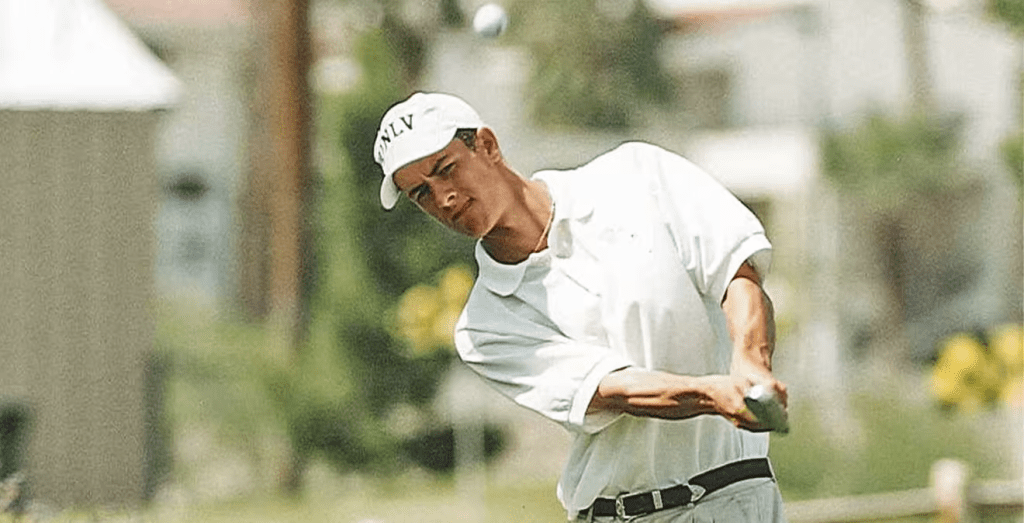
Adam Scott belongs at No. 1 because no former Rebel has a professional résumé quite like his: a Masters title, 14 PGA Tour wins, a run to world No. 1 and more than two decades of relevance at the highest level of golf.
A former UNLV golfer becoming a successful tour pro would have been impressive enough. Scott became a Masters champion, a former world No. 1 and one of the defining Australian golfers of his generation. His 2013 Masters victory alone puts him in a category almost no former Rebel can match. Winning a major championship is one of the highest achievements in individual sports. Winning at Augusta National carries even more weight.
Scott’s case is not built only on the green jacket. He also won The Players Championship, won multiple World Golf Championships, won 14 PGA Tour events and spent years as one of the best ball-strikers in the world. He was not a one-major flash. He became a fixture in elite fields, major championships and international golf for a generation.
That kind of career separates him from the rest of the list. There are former Rebels with stronger team-sport cultural arguments. Randall Cunningham changed football more. Matt Williams had a massive MLB résumé. Shawn Marion built a better NBA career than many people remember. But nobody else on this list can say they were ranked No. 1 in the world in their sport and won one of the most important championships in that sport.
That is why Scott stays at the top.
No. 2: Randall Cunningham
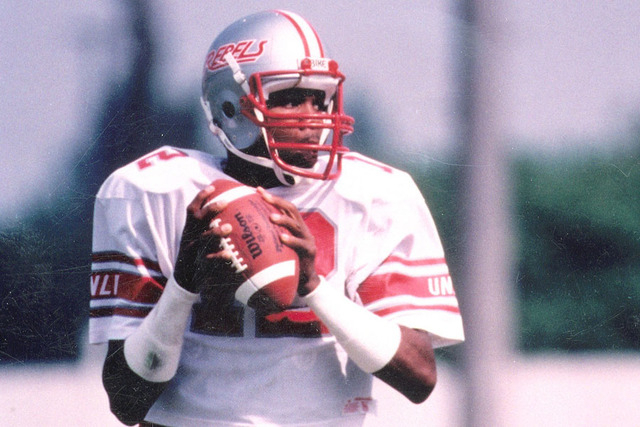
The first real debate starts here, and it is why Randall Cunningham belongs this high.
Cunningham was not just a very good NFL quarterback. He was one of the players who expanded the imagination of the position. Before the league fully embraced dual-threat quarterbacks, Cunningham was already showing what the position could become. He had a huge arm, rare athletic ability, creativity outside the pocket and the kind of open-field running skill that made defenses feel like the play was never actually over.
The numbers are strong enough by themselves. Cunningham threw for nearly 30,000 yards, rushed for almost 5,000 more, made four Pro Bowls and earned first-team All-Pro honors. Those are not novelty-quarterback numbers. Those are the numbers of a high-level NFL starter who produced in multiple phases before the league was built to maximize players like him.
His Philadelphia years made him one of the most electric players in football. He could throw deep, escape pressure, flip field position with his legs and turn broken plays into highlights. His 1998 season with the Minnesota Vikings added another layer to the career. Cunningham did not just return as a nostalgia story. He helped lead one of the most explosive offenses in league history and proved he could operate an elite passing offense at a high level later in his career.
That matters for his ranking. Cunningham was not simply a fun player or a local legend. He was a historically important NFL quarterback with real production, real peak value and real influence. When people talk about the evolution of mobile quarterbacks, Cunningham belongs in that conversation.
That is enough to push him ahead of every team-sport athlete on this list.
No. 3: Matt Williams
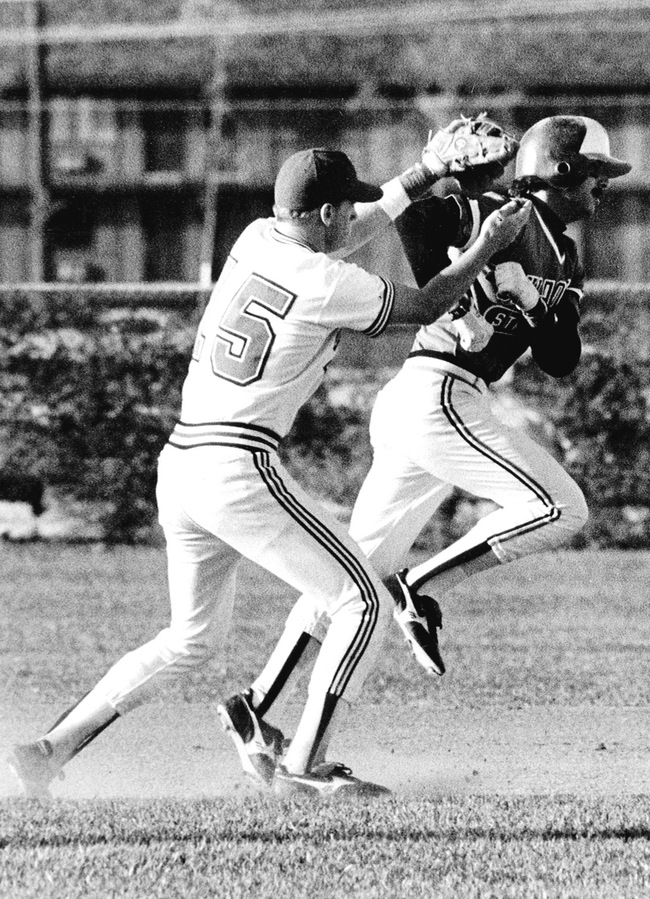
Matt Williams is where the ranking shifts from historical influence to total professional résumé.
Williams has the best MLB résumé of any former UNLV athlete, and he has a real case for No. 2 depending on how heavily someone weighs production over influence. He was a five-time All-Star, four-time Gold Glove winner, four-time Silver Slugger and World Series champion. He finished his career with 378 home runs, more than 1,200 RBI and nearly 1,900 hits. That is a serious baseball résumé, especially for a third baseman who was not just standing at a corner position and waiting to hit.
At his peak, Williams was one of the best power-hitting third basemen in the sport. He led the National League in home runs during the strike-shortened 1994 season and finished second in MVP voting. That year is one of the biggest “what if” seasons in modern baseball because Williams was on a historic home-run pace before the strike shut everything down.
The all-around value is what keeps him this high. Cecil Fielder had more pure power aura at his peak, but Williams had the broader profile. He could hit in the middle of a lineup and defend at an elite level. A third baseman with power, defensive value, awards and a championship is exactly the kind of professional career this list should reward.
His 2001 World Series title with the Arizona Diamondbacks gave the résumé a championship piece. By then, Williams was no longer at his San Francisco peak, but he was still part of one of the most memorable World Series winners of the modern era. Add the awards, the production and the positional value, and Williams is a top-three former Rebel professional.
No. 4: Shawn Marion

Shawn Marion sits just outside the top three, and the more basketball has changed, the easier his career has become to appreciate.
Marion is one of the most underrated NBA players of his generation because his value never fit into one clean label. He was not a traditional superstar scorer. He was not a classic power forward. He was not just a wing defender. He was not a point forward. Marion was something more unusual and, in many ways, more modern. He was a two-way connector who rebounded like a big, ran like a wing, defended multiple positions, finished without needing plays called for him and filled every part of a box score.
That is why his résumé has aged so well. Marion was a four-time NBA All-Star, a two-time All-NBA selection and an NBA champion with the 2011 Dallas Mavericks. He finished with more than 17,000 points, more than 10,000 rebounds, more than 1,700 steals and more than 1,200 blocks. Those numbers reflect a player who impacted the game without needing every possession to run through him.
His Phoenix years were the peak of his athletic identity. The Seven Seconds or Less Suns are remembered first through Steve Nash and Amar’e Stoudemire, but Marion was essential to making that team work. He defended, rebounded, ran the floor, finished in transition and allowed Phoenix to play smaller and faster without completely falling apart defensively.
Then he became a key piece on a championship team in Dallas. Marion was not the star of the 2011 Mavericks, but he was one of the veterans who helped make that title run work. He guarded, rebounded, cut, ran and gave Dallas the kind of versatility that championship teams need against elite opponents.
Marion lands behind Cunningham and Williams because they had stronger historical and sport-specific arguments, but his career is closer to the top than some people realize. He was a winning player for a long time, and the modern NBA would probably appreciate him even more.
No. 5: Reggie Theus
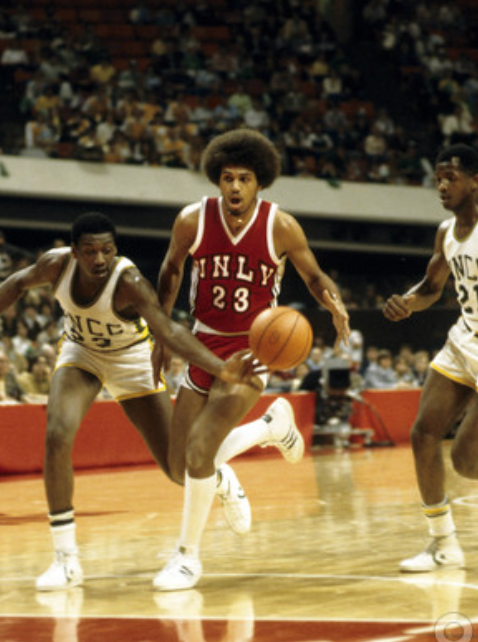
The fifth spot is where the argument becomes peak versus longevity, and Reggie Theus gets the edge because his NBA production is too strong to ignore.
Theus has one of the most overlooked professional careers in UNLV history. He was a two-time NBA All-Star, played 13 seasons and finished with more than 19,000 points and more than 6,000 assists. That statistical combination is not ordinary. It reflects a big guard who could score, create and carry offensive responsibility across multiple teams and multiple eras of his career.
At 6-foot-7, Theus had a profile that feels more modern than people sometimes remember. He could see over defenders, handle the ball, get to his spots and create offense. He averaged more than 18 points per game multiple times and remained productive for years. He was not just hanging around the league. He was a real offensive player for a long time.
Theus also gets hurt a little in public memory because he came before UNLV’s national championship peak. He does not get discussed with the same automatic nostalgia as the 1990 team, and his NBA career does not always receive the respect his numbers deserve. But if a player scores more than 19,000 points and hands out more than 6,000 assists in the NBA, that is a major professional career.
The fifth spot was not automatic. Cecil Fielder had the bigger power-hitting peak. Larry Johnson had the higher NBA ceiling before injuries changed his career. Ryan Moore and Chad Campbell had PGA Tour wins and Ryder Cup résumés. Armen Gilliam had a long, productive NBA career. But Theus had the best combination of production, longevity, role and statistical weight among the next group.
There are schools that would build their entire pro legacy around a career like Theus had. At UNLV, he is fifth on this list. That says more about the depth of the ranking than anything lacking in his résumé.
Just Missed:

Cecil Fielder is the hardest cut because his peak was louder than almost anyone outside the top five. He became one of baseball’s defining sluggers of the early 1990s, hit 51 home runs in 1990, led the American League in home runs twice, led the league in RBI three times, made three All-Star teams, won two Silver Sluggers and finished with 319 career home runs. If the list rewarded peak power more heavily, he could easily be fifth.
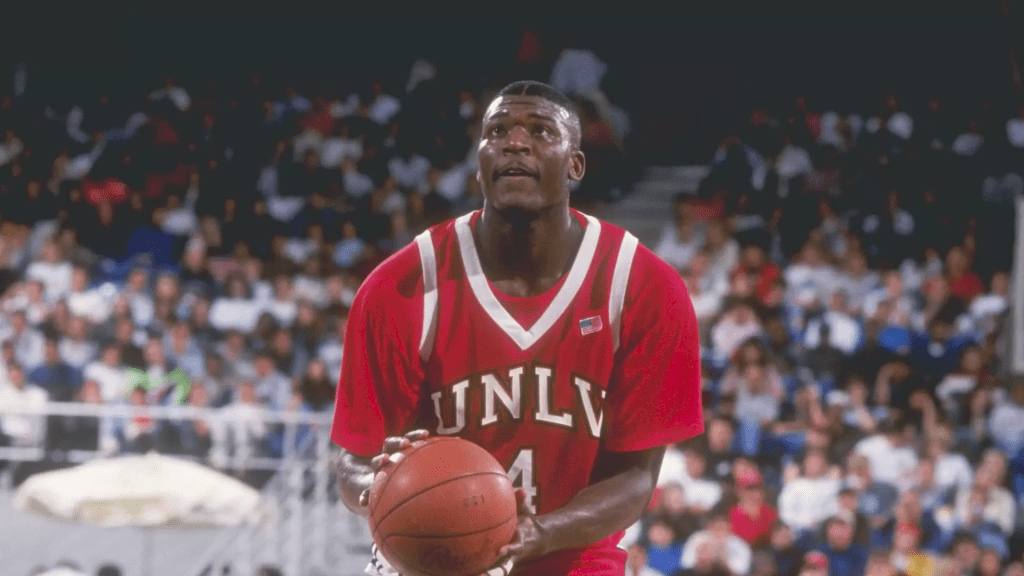
Larry Johnson also has a strong argument because his early NBA peak was enormous. He was the No. 1 overall pick, Rookie of the Year, a two-time All-Star and an All-NBA forward before back injuries changed the arc of his career. His second NBA season, when he averaged 22.1 points and 10.5 rebounds, still stands as one of the best individual pro seasons by a former Rebel.

Ryan Moore and Chad Campbell are the golf names who make this difficult. Moore won five times on the PGA Tour and delivered the clinching point for the United States in the 2016 Ryder Cup. Campbell won four times on the PGA Tour, played on three Ryder Cup teams and contended in majors. Both had careers that would rank higher if UNLV did not already have Adam Scott occupying the top golf spot.

Armen Gilliam gets squeezed out by the top-five format, but his 13-year NBA career deserves respect. He played 929 games and averaged 13.7 points and 6.9 rebounds, which is real production over a long period. Stacey Augmon, Isaiah Rider, Ryan Ludwick, Charley Hoffman, Greg Anthony, Ickey Woods, Bryson Stott and Erick Fedde also belong in the broader conversation depending on whether someone weighs peak, longevity, championships or current trajectory.
The biggest takeaway from this ranking is that UNLV’s professional legacy is broader than the casual version of the school’s history. The Runnin’ Rebels brand still defines the athletic department nationally, but the best pro careers stretch far beyond basketball. Scott gave UNLV a Masters champion and former world No. 1. Cunningham gave the school one of football’s most influential quarterbacks. Williams gave it a major MLB power-and-defense résumé. Marion and Theus carried the basketball tradition into long NBA careers.
That is a serious professional footprint.
UNLV has not only produced college stars. It has produced athletes whose careers held up on the biggest stages of their sports. Green jackets. World Series rings. NBA championships. All-Star selections. All-Pro seasons. Major playoff moments. Careers that lasted long enough to move beyond campus nostalgia.
That is what separates a school with a few famous names from a school with real professional history.
UNLV has both.