

LAS VEGAS — Josh Pastner spent much of his first season at UNLV explaining what he wanted the words Runnin’ Rebels to mean again. He wanted pace, ball pressure, players on the floor for loose balls and a defense capable of turning stops into offense before an opponent could organize itself. There were nights when UNLV looked like that team and others when the game slowed into the half court and the Rebels had to manufacture offense against five set defenders.
His second roster looks much more deliberately built for the basketball he kept describing. Terrance Ford Jr. gives UNLV a true point guard who can pressure the ball and run. Sebastian Mack is a downhill scorer. Dontrez Williams finished eighth nationally in steals last season. Cam Miles was recruited for his speed and ability to attack the paint. Moustapha Loum runs the floor at 6-foot-10. MJ Thomas rebounds and plays with a high motor. Behind all of them is Tyrin Jones, one of the Mountain West’s best returning rim protectors.
The first question is not whether UNLV has five elite shooters who can spread the court. It is whether the Rebels can create enough possessions before opponents ever have a chance to pack the paint. If Ford pressures the ball, Williams gets into a passing lane, Jones blocks a shot or Thomas ends a possession with a rebound, UNLV can run. Mack becomes more dangerous attacking a retreating defender. Jones can sprint to the rim before a center establishes position. Thomas can attack the glass before the defense finds matchups.
The shooting question starts when an opponent takes that away. Good teams will get back, force UNLV to inbound after made baskets and make Ford begin possessions against five defenders who already know where Jones and Thomas want to go.
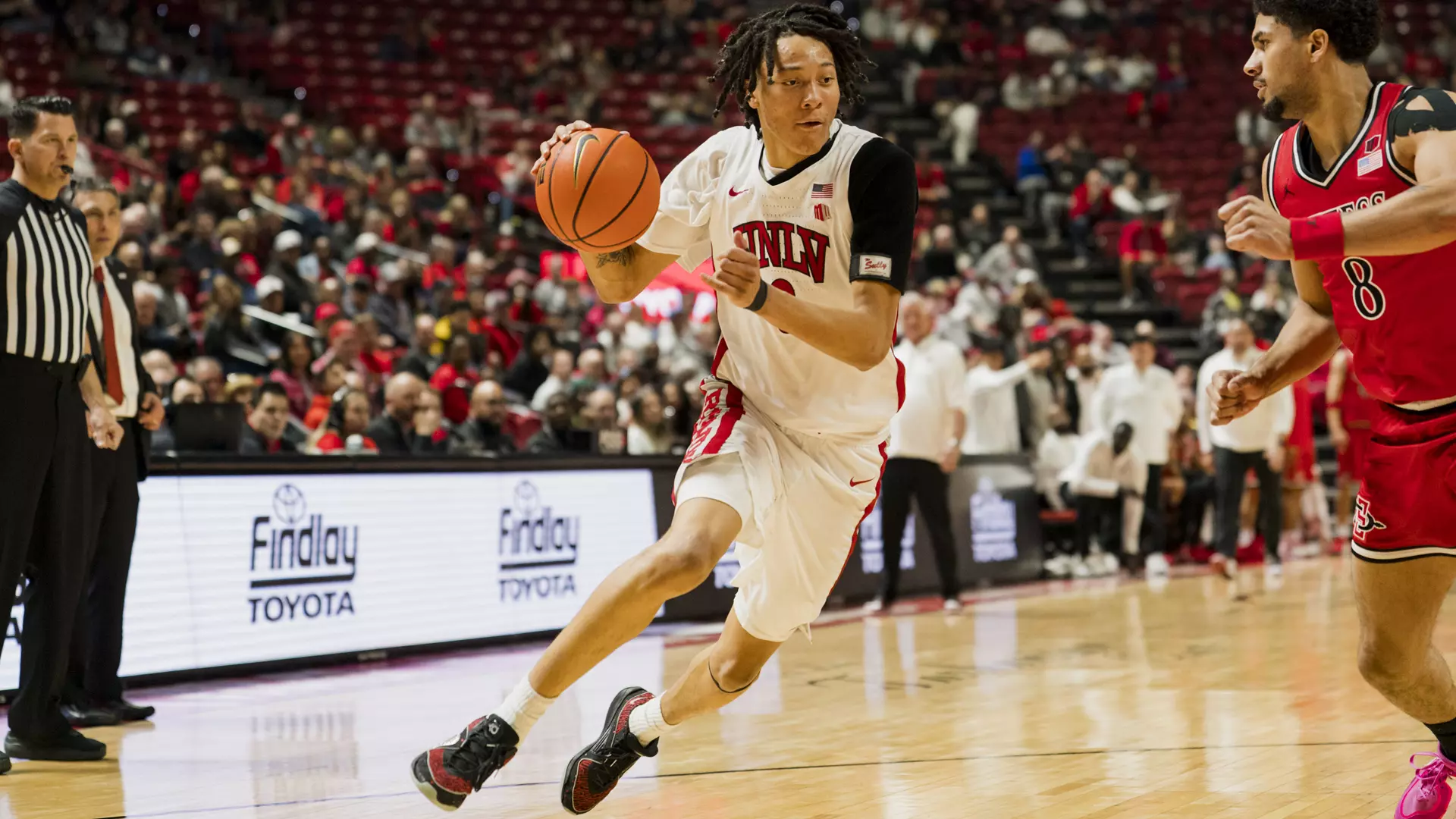
The turnover remains substantial. Jones and Issac Williamson are the two returning scholarship players who held regular rotation roles last season. Ford, Mack, Williams, Thomas, Tyler Harris, Miles, Jeremy Foumena, Loum, Jackson Kiss, Kota Suttle Jr. and AJ Storr were added around them. Storr remains the largest unresolved piece because the Tennessee Court of Appeals stayed the injunction that had opened another season of eligibility for him and other members of the 2022 high school class. He remains ineligible for now while still appearing on UNLV’s roster.
If Storr becomes eligible, the projected starting five is Ford, Mack, Storr, Thomas and Jones. Without him, Williams moves into that group. The rest of the rotation begins with Williamson as the first guard, Foumena as the first true big and Harris, Loum and Miles behind them, with Kiss and Suttle as depth pieces capable of forcing their way into more.
Ford is the organizing piece. He missed last season at Tulsa because of injury, leaving his 2024-25 season at Arkansas State as the best recent evidence for what UNLV is adding. Ford averaged 9.0 points and 4.9 assists, led the Sun Belt with 170 assists, posted a 2.3 assist-to-turnover ratio and made 40.4 percent of his 3-pointers. He has shot 39.3 percent from outside across his college career.
The scoring average undersells why he matters. UNLV spent too much of Pastner’s first season asking scoring guards to create the beginning and end of the same possession. Ford can push after a miss, come off a ball screen and force the defense to make the first decision. If he turns the corner and Jones’ defender steps toward him, Jones can dive behind the help. If a wing pinches toward the roll, Mack or Storr can attack the next rotation. Thomas can work the baseline or crash from the weak side after the defense has already moved.
Ford also fits the identity defensively. Pastner recruited him as a point guard who pressures the ball with active hands and is at his best in the open court.
Mack should benefit from it. His best basketball has consistently come with his shoulders pointed toward the rim. As a UCLA freshman, he averaged 12.1 points and attempted 172 free throws against 318 field-goal attempts. His 3-point percentages during his two UCLA seasons were 28.3 and 31.4. His role became much smaller at Missouri last season, but nothing about his college history suggests the best use of Mack is asking him to stand outside and wait.

Ford should let UNLV use Mack after the defense has already moved. He can attack a closeout, come off a handoff with momentum or drive at the defender rotating back after Jones rolls. His shooting still matters because opponents will test it. If Mack’s defender can go under a ball screen and stay between him and the rim, or leave him temporarily to crowd Jones’ roll, the possession gets smaller. He does not need to become a 40-percent shooter. He needs to make enough that ignoring him has a cost.
Storr would give UNLV something different if he becomes eligible. He averaged 15.5 points at Ole Miss last season after previously averaging 16.8 at Wisconsin and playing a much smaller role at Kansas. His production has moved with his responsibility, and his best college basketball has not come as a stationary floor spacer.
UNLV would not need him to dominate the ball because Ford can initiate and Mack can attack the second side. Storr’s value is what happens when the first action fails. Against better teams, Ford will get cut off. Jones’ roll will be covered. Mack will sometimes catch without a driving lane. Storr has already shown he can create a shot later in the possession when the offense no longer has a clean advantage.
Without him, Williams is the likely starter on the wing. He averaged 15.2 points, 5.1 rebounds and 2.1 assists at Lindenwood last season, but the number that best connects him to Pastner’s preferred style is 2.6 steals per game. Williams finished eighth nationally with 75. That does not tell us exactly how every takeaway was created, but it does show he repeatedly ended possessions before the opponent got a shot.
For this roster, that creates the floor UNLV wants. Mack can run. Ford can advance the ball. Thomas can sprint toward the rim. Jones can arrive before the opposing center is ready to meet him. The half-court fit is less comfortable. Williams made 50.2 percent of his 2-point attempts but 29.3 percent from 3. Put him beside Mack, Thomas and Jones and Ford becomes the only proven high-percentage college 3-point shooter in the starting five.
Thomas averaged 10.8 points and eight rebounds in 26.6 minutes at New Orleans while collecting 101 offensive rebounds. Of his 224 field-goal attempts, only three came from behind the arc. He does not need plays called for him to help. He can create another possession after a miss, run past a bigger forward and punish smaller lineups on the glass.
Jones should remain exactly what he became as a freshman. He averaged 11.9 points and five rebounds, led the Mountain West with 2.2 blocks per game and shot 59.4 percent from the floor. He attempted 241 of his 249 field goals inside the arc. There is no reason to ask him to become something else because another player cannot shoot. Jones should screen, sprint, roll, finish, rebound and protect the basket.
The problem is what happens when Thomas and Jones are together in the half court. Thomas wants to live around the basket. Jones wants to screen, roll and finish there. Neither has shown that a defense needs to follow him 23 feet from the rim. That means both opposing frontcourt defenders can begin possessions with a reason to stay near the lane.
If Ford turns the corner and Thomas’ defender is already standing in the paint, the driving window closes faster. If Jones rolls while Thomas works the dunker spot or baseline, the defense can keep two big bodies near the rim without abandoning a proven shooter. Mack and Williams then have to attack through more traffic.
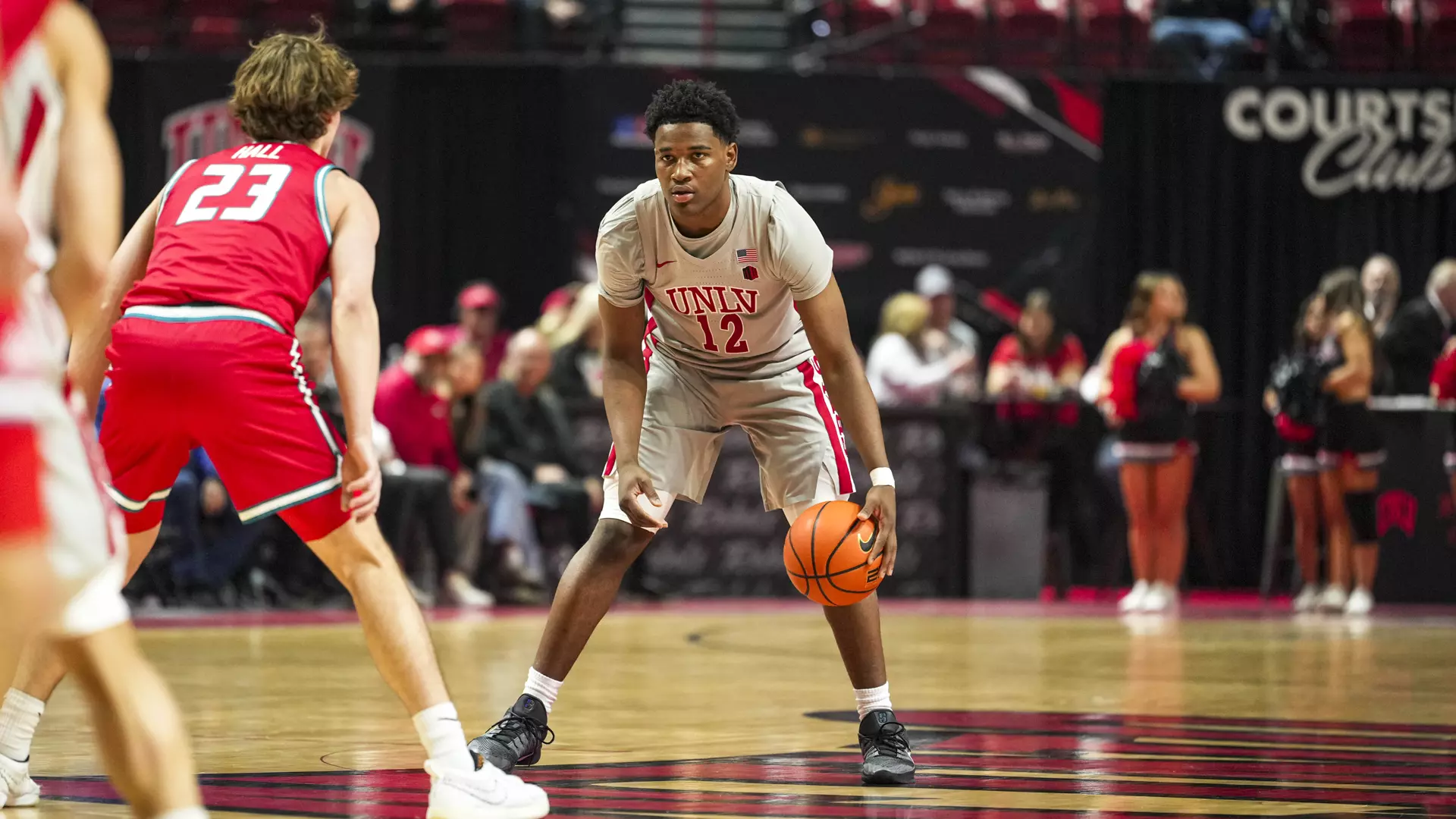
The pairing can still overwhelm teams in other ways. Thomas can punish smaller forwards on the glass, Jones protects the rim, and both can run. Defensively, Jones also gives Pastner more freedom to pressure the ball. If Ford gets clipped chasing over a screen, Jones can be behind the play. If Williams gambles for a steal and misses, Jones can erase a mistake at the rim. That is how pressure defense becomes a five-man idea instead of five players independently hunting steals.
Williamson is the most likely first guard off the bench and could rotate into the starting lineup depending on matchup and performance. He averaged 8.6 points in 23.1 minutes as a freshman, started 15 games and attempted 129 of his 241 field goals from behind the arc. His willingness to shoot matters on a roster with so many players trying to reach the lane. If his 33.3 percent from 3 improves, a defender has less freedom to leave him and crowd Jones or Mack.
Foumena projects as the first true big. At 6-foot-11 and 255 pounds, he gives Pastner somebody who can absorb possessions against traditional centers without making Jones do it all night. He averaged 3.5 points and 2.3 rebounds at UCF last season. UNLV does not need offense built around him. It needs screens, rebounds, finishes around the rim and enough size to change Jones’ assignment when the matchup requires it.
Harris may have the clearest path to changing the frontcourt mix. He made 49.5 percent of 91 3-point attempts at Washington in 2024-25 before falling to 28.8 percent at Vanderbilt last season. If his shooting looks more like the larger college sample, his defender has to leave the lane. That gives Jones more room to roll and Mack more room to drive. Harris does not have to score 12 points a night to become one of the roster’s most useful pieces.
Loum gives UNLV another runner, rebounder and shot blocker at 6-foot-10. His job does not require a large offensive role. If he sprints the floor and beats his defender to the rim, somebody has to stop the basket first, which can open an early driving lane for a guard. Miles gives UNLV another ballhandler behind Ford. He had 42 assists against 21 turnovers as a Florida State freshman and made 54.2 percent of his 2-point attempts. Pastner recruited him for his speed, downhill play and ability to keep the team moving when Ford sits.
Kiss and Suttle are the depth pieces with the best chance to force their way into the rotation. Kiss gives UNLV a 6-foot-8, 235-pound forward who can handle the ball for his size. His path is rebounding, defending older forwards and helping start transition himself. Suttle’s path is defense. If he can pressure opposing point guards, protect the ball and play with the energy Pastner wants, the older guards will not keep him off the floor simply because he is a freshman.
Cunningham is a walk-on and should be treated that way in the preseason projection. He played seven games and 20 total minutes last season. If he is playing meaningful competitive minutes, the story is probably injuries, foul trouble or another problem that has pushed Pastner much deeper into the roster than planned.
The likely rotation is easier to understand by role than by trying to rank every player. With Storr, Ford, Mack, Storr, Thomas and Jones project as the starters. Williamson is the first guard, Foumena the first big, and Harris gives Pastner the clearest shooting counter when Thomas and Jones make the paint too crowded. Loum provides another running big. Miles gives Ford relief at point guard. Williams remains a starter-level wing even if Storr moves him to the bench. Without Storr, Williams starts and Williamson becomes even more important as the first perimeter shooter entering the game.

Pastner can change the frontcourt depending on what the opponent forces him to do. Thomas and Jones can play together when UNLV wants to rebound and punish teams physically. Harris can replace Thomas when Pastner needs to pull a defender away from the lane. Foumena can handle a true center. Jones can play the five with four perimeter players when UNLV needs the most room for Ford and Mack to attack.
The exhibitions against Utah, BYU and Missouri should tell Pastner more about those combinations than the final scores. The important possessions will be whether Thomas and Jones can share the floor without choking off Ford’s driving lanes, whether Harris’ shooting moves a defender out of the paint, whether Ford looks comfortable after a year away and whether Miles can keep the offense organized when Ford sits.
Then the Players Era Eight raises the level immediately. UNLV opens against Kansas before facing either West Virginia or Auburn and then one of Houston, Rutgers, Florida or Notre Dame. Those games should expose any lineup that cannot protect the ball, rebound or create enough space once the transition opportunities disappear.
That is the real question hanging over Pastner’s second roster. He spent last season talking about becoming the Runnin’ Rebels again. This roster looks much closer to the team he described. Ford can organize and pressure the ball. Mack wants to attack. Williams can turn takeaways into transition. Thomas can rebound and run. Jones protects the rim. Miles and Loum keep pace in the second unit.
Storr would raise the offensive ceiling, but he would not create the identity.
UNLV has enough players to pressure teams, enough size to protect the rim and enough downhill creation to attack before a defense gets comfortable. The season will turn on how often the Rebels can play that way, and whether they can keep the paint open when somebody finally makes them slow down.
See something that needs correcting? Report a correction.